Loading…
Senior DevSecOps Engineer · 6 years
I build systems where security is built in - not bolted on.
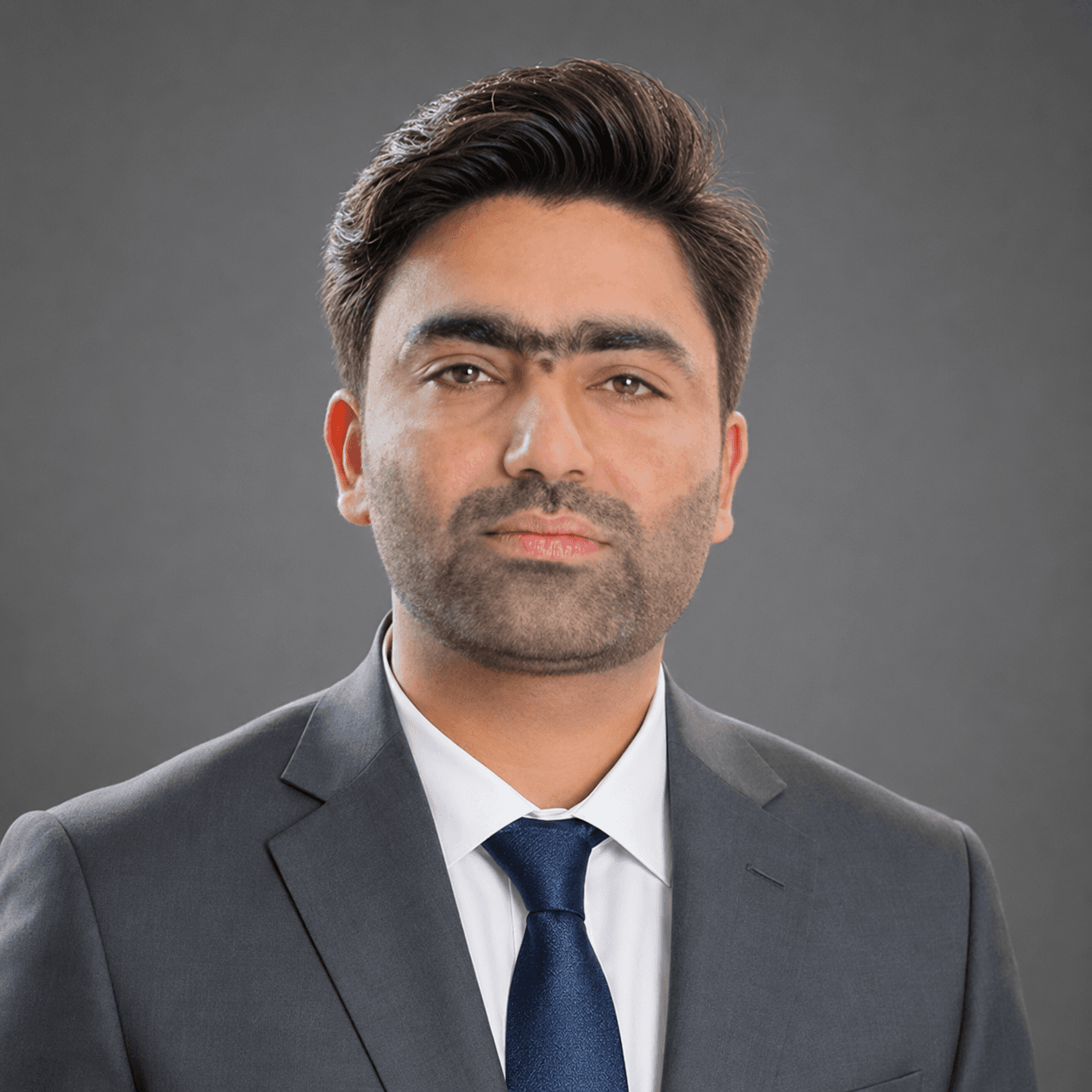
I'm Irfan Nazeer — a Senior DevSecOps Engineer specializing in security automation, multi-cloud architecture, and Kubernetes. I care about the things teams feel: fast, safe deployments, resilient infrastructure, and the kind of automation that makes the secure path the easy path.
- Currently
- Senior DevSecOps @ Verdant Soft
- Based in
- Islamabad, Pakistan
- Recent result
- 40% fewer vulnerabilities
The short version
How the work took shape.
I started in cloud infrastructure - managing AWS services, writing automation scripts, and tightening IAM access. That grounding taught me that reliability and security aren't features you add later; they're decisions you make in the foundation.
From there I moved deeper into DevOps and then DevSecOps: containerizing workloads on Kubernetes, hardening access with RBAC, building monitoring and incident response, and finally embedding security automation into CI/CD across multi-cloud environments. The throughline never changed - ship faster by making the secure, automated path the default one.
DevSecOps became my center of gravity because it sits where development, operations, and security meet. Automation, cloud architecture, and security stopped being separate concerns and became one craft.
The person behind the work
“The best security is invisible. Teams don't notice the pipeline guardrails - they notice that shipping just stays fast and safe.”
Engineering philosophy
Six principles the work runs on.
01
Security is a property of the system, not a phase.
Bolting security on at the end is how vulnerabilities ship. Embedding automated scanning and policy gates into CI/CD cut vulnerabilities by 40% — because the secure path became the default path, not a checklist someone runs at the end.
02
Automate the boring, and the dangerous disappears with it.
Manual steps drift, get skipped, and hide risk. Codifying infrastructure with Terraform and Ansible cut manual configuration by 50% — and the consistency that followed is itself a security control.
03
Fast and safe are not a trade-off.
Teams assume security slows delivery. Done right it's the opposite: gated, automated pipelines made deployments 30% faster while reducing errors. Speed and integrity reinforce each other when the tooling is good.
04
Least privilege is a default, not a favor.
Access you don't grant can't be abused. Hardening Kubernetes RBAC reduced unauthorized-access incidents by 50% — not through heroics, but by designing tight, role-scoped access from the start.
05
You can't operate what you can't see.
Reliability begins with observability. Metrics, logs, and SLO-based alerting across Prometheus, Grafana, and the ELK Stack cut incident response times by 35% and kept production at 99.99% uptime.
06
Compliance should be a by-product, not a project.
ISO 27001 and SOC 2 stop being fire drills when evidence is captured automatically on every build. Treating audit trails as output, not overhead, is how governance keeps pace with delivery.
What I solve best
The problems I'm built for.
Working style
What it's like to build with me.
I make the secure path the easy path.
Rather than policing teams, I build guardrails into the tooling — so doing the right thing is the path of least resistance, not extra work.
I communicate in risk and outcomes.
Stakeholders care about uptime, cost, and exposure — not tool names. I translate technical work into the language of the people relying on it.
I automate before I document.
A runbook is good; a pipeline that enforces the runbook is better. I'd rather encode a decision than rely on everyone remembering it.
I leave systems more reliable than I found them.
Hardening, observability, and mentoring aren't side quests — they're how the work keeps paying off after I've moved on.
The journey
Growth measured in scope, not titles.
Each role added a layer - from clean delivery, to full ownership, to modernizing systems, to senior architecture and reach.
- Senior scope2024 – Present
Verdant Soft
Senior DevSecOps Engineer | Lead DevOps
Leading security automation across CI/CD and multi-cloud architecture on AWS, Azure, and GCP — 40% fewer vulnerabilities, 30% faster deployments, and ISO 27001 / SOC 2 compliance evidenced by automation.
- Security in depth2023 – 2024
Verdant Soft
Senior DevOps | Security Architect
Led observability and incident response, cutting response times by 35%, and drove cross-functional adoption of DevSecOps practices across dev, ops, and security.
- Scaling cloud2022 – 2023
Devsinc
DevOps Engineer → Cloud Architect
Built automated deployment and scaling on AWS, and stood up monitoring with Nagios, Datadog, and New Relic. Learned to make systems observable and to cut deployment time by 30% while raising uptime.
- Foundations2020 – 2021
Wisdom Coders
Associate → Senior DevOps Engineer
Started in AWS infrastructure and IAM, automating Jenkins pipelines and establishing role-based access. Grew into containerization on Amazon EKS with hardened RBAC and 99.99% uptime — where reliability and security first became one job.
Beyond the resume
What keeps me curious.
Policy-as-code
Where governance becomes executable — turning 'be more secure' into enforceable, reviewable gates instead of wiki pages.
Platform engineering
The quiet leverage of golden paths: paved roads that make secure, reliable delivery the default for every team.
Cloud cost & efficiency
The discipline of right-sizing and automation that cuts spend without ever compromising availability or security.
Secure systems need strong engineering and clear communication.
If you're building something where security, reliability, and automation matter - for a DevSecOps role, consulting, or a deeper engineering conversation - I'd like to hear about it.